Blind Dogs Can't Be Happy? 7 Common Myths About Visually Impaired Pets, Busted!
Let's get straight to the point: The idea that a blind dog is a sad dog is a myth we’re eager to dismantle. They don't mourn sight; they master scent and sound.
This post is dedicated to giving you the real, authentic answers behind the seven most common questions we receive.
We're proving that with simple consistency and love, a blind dog's life is defined by joy, not limitation.
🐶 Myth 1: They Are Sad/Mourning Their Sight.
Reality: They are not! They are masters of adaptation.
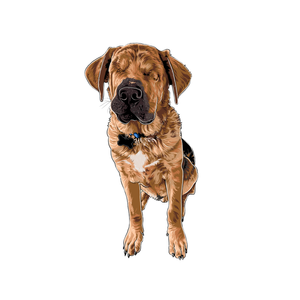
For dogs like BigBlindBear, who was born visually impaired (congenitally blind), there is no concept of "loss" or "mourning." He has always relied on his incredible nose and ears to navigate the world, and that is his normal.
Even for dogs who lose sight later in life, they adapt far faster than humans. They live in the present moment and quickly shift their reliance to their powerful scent world. Any signs of initial "sadness" or anxiety are usually just confusion from the sudden change, not grief. The best thing you can do is focus on building confidence through consistency, not pity.
🏃 Myth 2: They Can't Play Games or Run.
Reality: They can play, run, and zoomie with the best of them—and yes, they can even go to dog parks!
You just have to adjust the rules of the game to engage their powerful hearing sense of smell:
Sound Retrieval: Invest in toys with loud, distinct bells or large squeakers. Use a verbal marker ("Find it!") to encourage tracking by sound.
Scent Work: Hide high-value treats in a snuffle mat or under towels. This is highly enriching and mentally tiring!
Yard Safety: Use a securely fenced, mapped backyard for safe running.
Safe Socialization (The Dog Park): While caution is required, many blind dogs thrive at dog parks!
Use High-Visibility Gear: We always use a bright green leash that clearly says "BLIND DOG" on it. This signals other owners to approach gently.
Stay close to your dog and be their eyes—verbally warning them of fast-approaching dogs.
🤗 Myth 3: They Require Constant Carrying and Coddling.
Reality: Over-coddling can actually create anxiety.
Confidence comes from independence and mastery of their world. When you constantly scoop them up or block their path, you interrupt their internal mapping process, which is how they learn.
Be a Guide, Not a Limiter: We use a simple command like "Slow!" or "Step!" to give Bear a warning, allowing him to navigate the obstacle himself.
The Power of Consistency: Ensure all furniture stays in the same place so they can trust their internal map.
💰 Myth 4: They Are Expensive to Care For.
Reality: Initial costs are usually low, and long-term costs are often similar to sighted dogs.
The best adaptive gear is simple:
Low-Cost Gear: Foam corner guards, different texture mats, and basic bells on collars.
Highest Expense is Time: The most valuable investment is your patience and commitment to setting up routines and proofing the home.
👨👩👧👦 Myth 5: They Can't Live with Kids or Other Pets.
Reality: They thrive in busy, loving homes!
The only caution is preventing your dog from being startled, as they can't see an approach.
Teach a Cue: We teach children and other pets to approach with a clear verbal cue first ("Bear, friend!") and touch him gently on a non-sensitive area (like his back).
Safe Space: Always ensure your blind dog has a crate or bed where they can retreat for guaranteed quiet time.
🧠 Myth 6: They Can't Learn New Tricks.
Reality: They are masters of scent and sound training!
Vision is overrated when you have a nose like a dog. Training is essential for mental enrichment and confidence.
Verbal Markers: Use clear, consistent vocal markers (like a sharp "Yes!" or a clicker) to signal success immediately.
Scent Games: Teach advanced commands like "Find Mom" or "Go to Bed" using scent trails or target mats.
⏳ Myth 7: Their Life Span is Limited.
Reality: Vision loss itself does not shorten their life span.
A blind dog, if otherwise healthy, can live a full, happy, and normal dog life span.
They have a massive capacity for joy and resilience. Don't let blindness be a barrier to adopting a beautiful, loving companion!
If you needed a sign to open your heart to a special needs pet, this is it!
Blind dogs are not disabled; they are simply navigating the world differently. With a little consistency and a lot of love, they will enrich your life in ways you never imagined.
What's the most surprising myth you learned today? Share in the comments!