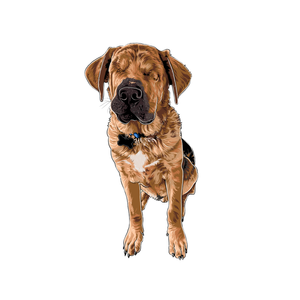
Blind-Dog Proofing Your Home: The Ultimate Safety Checklist
Welcoming a blind dog into your home doesn't mean you have to live in fear. It means you have the beautiful opportunity to create a consistent, safe environment that builds their confidence and allows their other incredible senses to take over.
Our home is their map, and consistency is the key to unlocking their resilience. Use this checklist to transform your space into a safe haven where your blind pup can thrive!
-
Resist the urge to rearrange! Once your dog has mapped the house, even small changes can cause anxiety and injury. Keep furniture, water bowls, and beds in the same location indefinitely.
-
Use distinct floor textures to provide vital navigational cues. We use different runners or rugs to signal high-traffic areas or transitions. Crucially, we place a specific type of mat or rug right by all exterior and interior doors. This gives BigBlindBear a sensory boundary, so he knows exactly when he is approaching an open doorway or exit.
I have also heard that you can use small, distinct scent markers (like a drop of vanilla extract on a door frame) to help them navigate. We have not tried this with our blind pup, the rugs work just fine!
-
Sharp corners are the most common source of injury. Use simple, inexpensive foam corner protectors on all coffee tables, shelves, and cabinets. A head bump is inevitable, but an injury is not.
Living Room & High-Traffic Areas
Remove or Pad: Glass-top tables, decorative items on low shelves, and sharp-cornered furniture (pad these!).
Edge Protection: Install foam corner protectors or, as a suggestion, use split foam rollers/pool noodles to cushion the edges of tables.
Clear the Floor: Ensure low-hanging items (like power cords, shoes, or children's toys) are always picked up and off the pathways.
Create Islands: Group large furniture items together to create clear, defined walking lanes rather than open, confusing space.
💡 Owner Tip for Extra Safety: Our dog, Bear, is naturally a cautious and methodical navigator, so we primarily use simple corner guards to cushion edges. However, you may consider using soft foam rollers or pool noodles split lengthwise to entirely cover the edges of wide, sharp tables. This method can be very helpful for dogs who are faster or less cautious in their home navigation.